"Sporti Shqiptar". "World Sports". "FIFA Football". "Futbolli ne Shqiperi". "Yje te futbollit shqiptar". "Olympic Games". Sport Vision + Plus | The Champions Hour: WORLD STARS | YJE TE BOTES

Translate

Showing posts with label WORLD STARS | YJE TE BOTES. Show all posts

Friday, June 27, 2025

From Harald to “Toni”!


The Greatest Goalkeepers of the World!
Harald Anton “Tony” Schumacher!

From the “Anpfiff” book:
In my favorite film, "Rocky," Sylvester Stallone hammers the colossus in the ring. He sweats like the stoker responsible for the fires of hell. He wants to win. Rocky—a man from the gutter—wants to conquer his opponent, his poverty, his fate.

"That's you. Not a boxer. A football Rocky.
A boy who wants to get out of trouble," was the first thing I realized when I saw the film.

My "slums" were in Düren, one of the worst-affected cities in Germany by the war. But children can play even in ruins. We lived in a "poor people's settlement," and our neighbors were the "antisocial" people.

I was able to follow the decline of entire families; many fathers were alcoholics, many mothers a mixture of slobs and scoundrels. Of course, there were others, but poverty was everywhere you looked. At home, there wasn't a single piece of meat in the pot. Our diet consisted mainly of potatoes and more potatoes. For good measure, a leaf of cabbage. Not very varied.

My sister and I shared a tiny room. Actually, a larger drawer. This time of cramped conditions also gave rise to the claustrophobia that still haunts me today. On the field, I can't stay in my goal cage. I try to get to the halfway line as often as possible.

My father worked in construction. He left home early at seven. He came back in the evening completely exhausted. He was silent. In winter, he stretched his tired legs toward the stove.

"Father" – for many years, that meant to me: a pair of legs in front of the fire. He wasn't a drunk. Thank God. He was a quiet, simple, decent man. He's still like that today. Without his calm, honest nature, I might have gone astray. Many of my friends were ruined by the example of their drunken fathers.

My mother had the greatest influence on me. I spent the whole day with her, watching her sew for other people. And she kept telling me: "Leave it, boy. Poverty is no shame. Stay honest and hardworking. You have nothing to be ashamed of."

There was little distraction at our playground other than a sandbox – enough space for soccer. Soccer became my outlet. Finally, space to romp around. Away from the poverty at home. I played striker. He'll prevail," said the coach of "Schwarz-Weiß Düren," my first soccer club. My mother thought I should become a member.

Fighters live more dangerous lives, even as children. "You run too much, Harald. You're completely exhausting yourself," my trainer scolded. "You need to manage your energy and strength better."

"Right," echoed Mother. "He always comes home completely exhausted. Drenched in sweat. He can't contain his ambition. Always racing at full throttle. He looks really rickety."

Both of them were worried about my health. And again, my mother decided: "Now you'll find a steady, quiet position. Why don't you go in goal? That was something for you." So I became a goalkeeper. Because that was a "quiet position"...

I was twelve at the time. Even in goal, I remained immensely ambitious. The Rocky syndrome? It was clear to me: "You're just poor. A high school diploma is out of the question. University even less so. But to those who are allowed to learn, I'll show them what I'm made of."

I was never envious. I just didn't understand why everyone should have their place in the sun or in the rain from birth. The privileged boys weren't to blame for their parents' wealth. Envy is nonsense. Looking forward makes sense. I had to fight hard for everything because I simply wasn't particularly talented.

But fighters ultimately fare better in life than the highly talented, naturally blessed. I'm now firmly convinced of this – with the necessary distance from things. An initial handicap has become a ladder to the top for many. Streisand, with her silver eyes, Clark Gable, who used to have a pitiful stutter, finally made it. With iron diligence and will, with hard work on himself.

For me, the will was there first. In the duel of "field player versus goalkeeper,"
I made a good impression right from the start. I had no fear of injury and didn't think about possible dangers.

Win. Be the best.

By the age of 15, I was already training four times a week: twice with the youth team and twice with the first team. I lived like a monk. Football left me no time for girls. I didn't own a moped, and I only knew discos from the outside. Football was the meaning of life. And there was a dream: my role models were the "star goalkeepers" of the 1950s – Toni Turek and Fritz Herkenrath.

Every Sunday, I was able to reap recognition and admiration with my parades. I gained pride and self-confidence for the entire week. I forgot the cramped conditions and poverty of my settlement.

"Did you see how Harald held ?" people seemed to whisper.
"He's Helga and Manfred's son. That boy will become something special." That was grist to the mill for my ambitious aspirations.
Social advancement through sport. That's how it was for me. I also saw the parallels to other social outsiders. Aren't most Olympic jumpers and sprinters Black? Like them, I too chased recognition. Even today, it's a mystery to me why not all Black people are world champions in something. In the early 1980s, we had a young Black player in our club in Cologne.

Toni Baffoe was 18 years old, played in the A-youth team, and wanted to become a professional. His performances were too inconsistent; he was easily discouraged and prone to self-doubt. This made me furious. "Listen," I shook him. "If I were Black, which for many means dirt, if I were at the bottom like you, then, damn it, my skin color would be reason enough to become the best footballer in the world." Don't let yourself get down like that, man. Show them what you're made of! Unfortunately, Baffoe didn't have enough grit and didn't – like me – have a severe allergy to humiliation.

Prom after dance class. I was sixteen. I had successfully overcome shyness and the tango step. The girls were nice – my fingernails were sparkling clean. I enjoyed the company of well-groomed peers, Coke and soda, and a few jealousy squabbles.

Finally, the eagerly awaited prom. The first social event. And the first clothing "drama." My communion suit hadn't fit long ago. I didn't have any cousins my own age from whom I could have borrowed a suit. All that remained was my father's good dark blue one.

"Out of the question," I protested to Mother. "Father's suit looks like a saddle on a pig. I want my own!" "And how much money are you going to pay for it?" Mother asked.

"You're a bit megalomaniacal."
" Gritting my teeth, I set off in Father's freshly ironed suit—with suspenders because the pants were much too wide. Among all my smartly dressed and well-dressed classmates, I felt like the village proletarian. I've rarely felt so miserable. I felt like a "white Negro"—and was determined to get rid of this skin as quickly as possible.

I put my full concentration into training. Through targeted progress, I wanted to make it into different national teams. And I did: Düren District – first level; Middle Rhine Selection – second level; West Germany – third level; Youth National Team – fourth level.
Everything went smoothly until the end of the 1960s.

The coach of the youth national team at the time was Herbert Widmayer; he had watched me at tournaments. The decisive moment came during a match for the West German youth team: at the end of the tournament – a penalty shootout. I saved three of five shots. After that, my name was suddenly on everyone's lips: "Schumacher, Schwarz-Weiß Düren, that boy is one to watch."

The clubs' and the DFB's (German Football Association) snoops were wide awake. My inclusion in the national youth team was only a matter of time. Most of the national youth players already had a contract with one of the Bundesliga clubs.

Jupp Röhrig, youth coach of FC Köln, then suggested I try out for the Cologne youth team one day. I was sixteen at the time and felt enormously flattered. But I had to – reluctantly – decline the offer.

"I have to get a job," my mother decided.
"Soccer —maybe later, but first you'll learn something proper."
No sooner said than done: I became a coppersmith – an incredibly physically demanding profession, by the way.
After my journeyman's exam, Röhrig knocked again.
The time had come. "I'll come. Mother agrees."

That was the new beginning of my life.
Football – nothing but football, in mind and body. Every day.

Heavenly!

I was a professional, but without today's pressure to perform, without the press, without rivals, without the pressure to be and remain number one. For the first time in my life, I was earning money, a lot of money: 1,200 DM a month – and that at 18. In my final year of apprenticeship, I had received 320 DM a month.

Now there was also an annual bonus of 30,000 DM. All in all, an annual income of over 45,000 DM. I thought it was fantastic. My father would never have been able to scrape together that much money, even if he had worked day and night.

I had already done quite well in the youth national team. I was almost a bit of a "star," or rather, a "starlet." "Schumacher, he's a great kid," I'd heard. But very soon it became clear that I had some weaknesses – and that meant I had to work hard on myself. I had already thought I was the greatest. But in reality, I was "Mr. Nobody."

The difference between amateur and professional football is like the difference between raspberry ice cream and a skyscraper. Huge. Just like the challenge for me.

The "number one" in Cologne was Gerhard Welz. A madman, a kind of Rocky. He trained like a maniac. Full of youthful self-confidence, I thought: "Schumacher, goalkeeper of the youth national team, just sweep him away!"

And I immediately realized it wasn't that easy. The strikers played like pure devils. Lightning fast. Blasting, precisely placed shots on goal, balls like Welz's saves, remained – still – out of my reach.

Difficult times followed. I played in unimportant games, but not a single Bundesliga or cup match. Purely vegetating. A half here, a friendly there – not the slightest chance of a breakthrough. Despite training and hard work, nothing was happening. I was treading water.
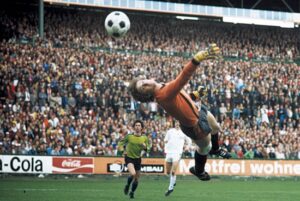
 

1974/1975, Stadium Radrennbahn Muengersdorf, 1. FC Cologne versus Borussia Moenchengladbach 1:2

Until the day Welz was injured: a ruptured kidney and a head injury.
The chance? My chance?
Think again.

I shared the number one title with Topalovic, a Yugoslavian.
1. FC Köln had two mediocre goalkeepers instead of one top-notch one...

But: The time of naive hopes, the time of illusions in the 29-year-old national youth team, those were just fond memories.

The first training session with Rolf Herings, the goalkeeping coach at 1. FC Köln, was the moment of truth. Balls were flying around my ears – I couldn't catch a single one.

Years later, Rolf confided in me: "You were completely crushed. There was no trace of self-confidence left. You were offended by every remark.

You hopped after balls like a squirrel and fell on your stomach like a ripe plum from a tree. But you wanted to learn. That impressed me. Your ability to persevere, even after hours of training, completely exhausted. You were always ready to use every last bit of your strength. 'Better that than slaving away as a coppersmith for eight hours,' you said, Harald. That impressed me."

Topping-out ceremony in Mechernich, near Cologne. Heinz Flohe had invited us. The national player and Cologne soccer star had built himself a house. Beautiful, large, and expensive. The builder was Rüdiger Schmelz, Flohe's manager and supervisor. Admiringly, I dreamed of one day achieving the same level of success as Flohe.

"Would Schmitz be a good fit for me, too?" I asked him, embarrassed. "Of course," he said. "You, need a manager to bring discipline and self-confidence into your life and your game." Schmitz was 31. I was 19, shy, and—still—quiet. A completely normal young guy from the provinces. I immediately trusted Rüdiger Schmitz. He, too, liked me, but he thought my strong attachment to my mother was exaggerated.

"Harald, you should keep a little more distance from Düren and your childhood," he recommended. "Otherwise, you'll never make it." He knew how much I loved my mother, and he thought that was fine in principle. It only bothered him that whenever I had the slightest doubt about the world or myself, I always sought refuge in her, and found it. Mother stood by me unconditionally. "It's poison," Rüdiger scolded, "that you always let your mother console you. Even when you've made the biggest mistakes. Mama's boys have no place in professional football."

I didn't know the answer, I was disturbed. "Directness, ambition, and even brutality are the virtues in demand," Schmitz continued. "You should finally put your umbilical cord away, otherwise you'll trip over it."

Rüdiger helpfully replaced my parents' home for me at first, but then he left me alone more and more often and pushed me, kindly but firmly, into a life where I was on my own. It was a hard road, paved with humiliation. And for a long time, I constantly felt overwhelmed.

I earned the not-so-glorious nickname "Fidgetty Philip" in goal between 1973 and 1977. Weisweiler, my coach from July 1976, didn't utter the slightest criticism in my presence. He simply ignored me, only to later ridicule me thoroughly in public.

Hennes Weisweiler is sadly dead. He was a very good coach and a terrible judge of character. Instead of helpful criticism, he spread caustic, unsettling ridicule.

At one point, he decided to "give me away" to another club. I was deeply hurt, offended, and insulted.

"Get rid of Schumacher!" Weisweiler yelled.

I found out about it indirectly. And finally, I wanted to leave, too. My appearances were sporadic, and I was ready to throw in the towel.

At that time, Rüdiger Schmitz had a house in the Eifel, right on the edge of the forest. We would walk for hours. "It calms the mind," smiled Rüdiger, "the fresh air drives the fog out of the hothead."

After a few steps, he stopped, suddenly quite serious: "You're a natural talent," he declared, almost solemnly. "You're like a diamond still hidden in a lump of ore.

How many times does it have to be polished until it's perfect? If you work energetically on yourself, if you polish away all your flaws and mistakes, you can release the preciousness within you."

This meant I was facing a new beginning. Rüdiger demanded extreme discipline. When he said, "Come at 6 p.m.", it meant 6 p.m. sharp, and not a minute earlier or later. "Focus exclusively on your coach and teammates," he insisted. "I don't think much of distractions right now."
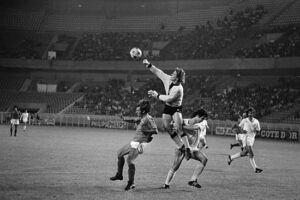

German goalkeeper Harald Schumacher. 

Schumacher, the "happy Cologne character," became more serious, more thoughtful. But the "fidgety Philip" was far from over. All of Cologne continued to amuse himself with Topalovic and me. The two of us were the problem cases of our team, constant topics of discussion for the board and the club doctor's concern. Slowly but surely, I became a complete bundle of nerves.
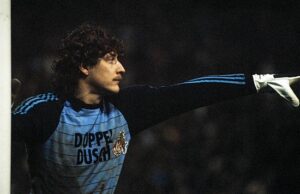

Bundesliga, 1982/1983, Stadium am Boek Elberg, Borussia Moenchengladbach versus 1. FC Cologne 1:4, scene of the match, keeper Harald Schumacher 

"You want to do too well. You're overzealous," the club doctor, Dr. Bonnekoh, explained to me. "Don't be so hectic. Try to gain some distance, stay cool. Why don't you try to learn to control yourself, for example, through autogenic training."

That too. I reacted stubbornly. "That's out of the question. I don't believe in all that crap about horoscopes and that nonsense anyway." "Try it anyway. It can't hurt you. It's completely harmless." I realized that and trotted obediently to Dr. Schreckring, a very nice doctor.

"Think of something nice," she taught me.
"Vacation, beach, sea, sun, family vacation.
Your arms and legs become heavy.
The solar plexus radiates warmth.
You concentrate.
You play, want to catch every ball….
Like a tiger awaits its prey.
Let it come, grab it with lightning speed..."

At first, I practiced for about half an hour a day, then six times a full hour to really learn the technique. Since then, I've used it during training and before every important game.

Concentrate, switch off, a thousand times. True greatness is self-control.
Even at the 1986 World Cup in the cauldron of Monterrey before the penalty shootout against Mexico.
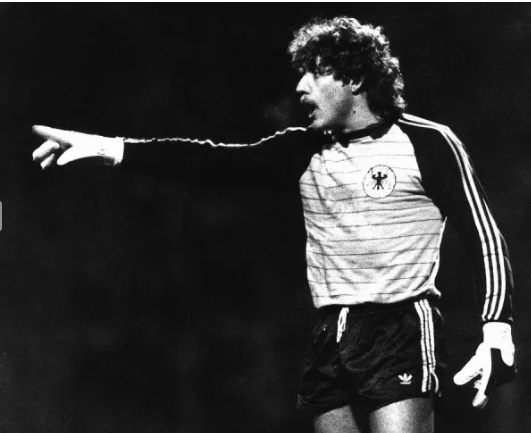
Franz Beckenbauer reported on it: "Toni is sitting on the grass, his hands pressed against his temples. I knew the game had absolutely drained him. Even though he's standing most of the time, he's losing three or four liters of sweat."

He's concentrating so hard that he's had cramps a few times. I go to him. No one can imagine the pressure Toni was under. I can only guess, having never had to go through anything like that as a player. If you fail now, the team will be eliminated. All hopes are on you. I went to him; somehow he seemed distracted.
'What is it, Toni?' I asked quietly.

He didn't hear me.
'What's wrong?' I asked again. Again, nothing.
Then, finally waking up again: 'Franz, be quiet.

What's wrong?' And then he yawned. It really was as if I had woken Schumacher from his sleep."

Franz had observed carefully. I was gone. I had recovered from the fight.

Delay hasty reactions, wait.
After that, I was able to save two penalties.
Penalties are torture... controlling reflexes, shooting out in the last hundredth of a second. A broadening of perception. Simply switch off thinking and considering.

During a penalty shootout, the goalkeeper is to the other players what the madman is to the normal person. He is the lightning catcher; like a magnet, he has to direct the approaching leather ball towards his body.

I owe it to Dr. Schreckling that I can channel my madness into very specific directions.

Back to 1977. The club manager at the time was Karl-Heinz Thielen, who then resigned from his position as deputy chairman of 1. FC Köln in October 1986.

He didn't think much of my autogenic training. Bluntly, as is his way, one day, five games before the end of the Bundesliga season, he gave me a good dressing down:

"Listen, Toni. We're looking for a new goalkeeper. We want to let you go. There's no point in this anymore. Weisweiler doesn't want to work with you anymore."

Training, concentration. Was it all for nothing? Didn't I make fewer and fewer mistakes the more often I played? My error rate had dropped from 30 to 27 percent. I had to try to remain error-free in these five remaining games. If possible, until the 1977 DFB Cup final. I had resigned myself; I didn't want to stay in Cologne anymore, but wanted to try to be as perfect as possible in order to at least secure favorable terms when changing clubs.

Norbert Nigbur has already been named as my successor. Frustration. Impatience. I won't get the chance to show my best side.

Topalovic, considered a bit more consistent than me, played all the Bundesliga games. I sat on the bench, in top shape.

The opportunity finally presented itself in the game against Hertha BSC. Topalovic, who suffered from severe fear of flying, decided not to travel to Berlin.

So I flew in his place – and made fantastic saves. No mistakes, brilliant saves. The result: 1-1 my achievement. I was the number one in Cologne. Finally.

1977 in Hanover: Final against Berlin. Norbert Nigbur was in goal for Hertha Berlin, but had already been in Cologne for negotiations. His contract with 1. FC Köln was 90 percent finalized.

We won 1-0. Nigbur raged, argued with the referee, and claimed that we Cologne players had bribed the referee. This meant that he was no longer an issue for the Cologne board members.

Two days later, we flew to Japan for a friendly match. On the plane, Weisweiler, who could only acknowledge successes, sat down next to me. "Listen, Toni," he growled. "I don't want to beat around the bush here. You have to know one thing. You're number one for me now."

I was indescribably happy. Things were looking up. But as Rüdiger Schmelz explained to me so dryly after a well-deserved break: I would only become the greatest, the best, if I continued to train at least 20 percent more than my rivals. "Because the real fight only begins when you're dead tired. Being knocked out and saying okay. That's the secret of success."

A lot had already been achieved in Cologne. Little Harald from Düren had become a great Toni. Toni, because my middle name is Anton. But above all, it was a reference to Toni Turek, the greatest German goalkeeper of the post-war period.

Toni. A first name became a title of nobility for me.

In 1977, 1. FC Köln won the DFB Cup, and in 1978, the Bundesliga and DFB Cup titles. In 1978, the World Cup took place in Argentina. Helmut Schön was the national coach, and Sepp Maier, my great role model, was in goal. I would have been happy to be there as number two or three. "Whatever Nigbur, Franke, and Burdenski catch, I'll catch," I said in a newspaper, offended at not being invited.
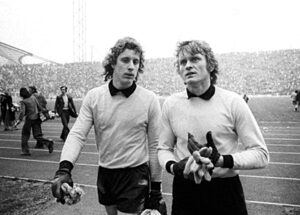

Young Schumacher alongside the great Sepp Maier

Brashness – that was frowned upon. Helmut Schön, a strict Saxon, liked it even less. "Schumacher? A loudmouth, an immature brat," was his verdict. In retrospect, I think the man was right. Maier was a superb goalkeeper, played 400 games without a break, reliable and consistent. Why should the national coach look for problems and invite me? Perhaps that would have irritated Sepp Maier?

In 1978, Jupp Derwall became Helmut Schön's successor, and initially behaved towards me like his predecessor. I was given one chance, for half a game: during an international match against Iceland. After that, for a year, “FDuien kPstriellses” promoted me: "Schumacher, outstandingly good, great saves, deserves his place in the national team."
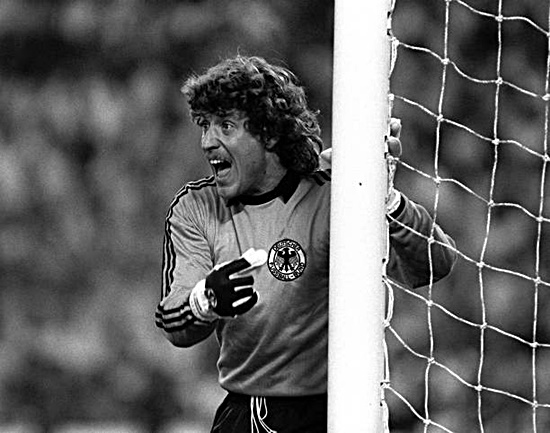

1982 World Cup Finals, Second Phase, Group B, Madrid, Spain, 2nd July 1982, West Germany 2 v Spain 1.
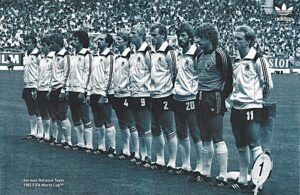
Derwall was under pressure. Did he have to call me up for the national team?
Norbert Nigbur remained his favorite. Until that disastrous lunch: Nigbur was sitting at the table with his girlfriend, trying to get up after the lovely meal.

Impossible. The knee – immobile.
"Trapped meniscus," the doctors diagnosed.
The end of a career... the beginning of mine?

Franke or Schumacher? Another forced decision for Derwall before an international match in Munich, this time against England.

"I want to play the match, for 90 minutes," I announced in an interview. "Insolence, blackmail, outrageous impudence, " the national coach ranted, beside himself with indignation – before finally giving in.

The 1980 European Championship in Rome was a highlight. I was able to fight and win with the best team I could imagine. With young talents: Bernd Schuster, Hansi Müller, Karl-Heinz Rummenigge.
No big stars like 39 Overath, Beckenbauer, Netzer.

The atmosphere was excellent, the team spirit ideal. Freshness and enthusiasm. Derwall rarely had to intervene.

We became European champions. That was almost a given.

From then on, I was the undisputed number one in goal. With all the consequences: pressure to perform, the certainty that numbers two and three were waiting for me to pinch my meniscus, break my leg, or something else. Bad luck can't be ruled out. God has that in His hands. I can't defend myself against it. Success is like beauty; it can't last forever.

Excerpted from the book: "Anpfiff" (1987) autobiography of German goalkeeper Harald "Tony" Schumacher! (Pages 20-39)


FOTOGALLERY
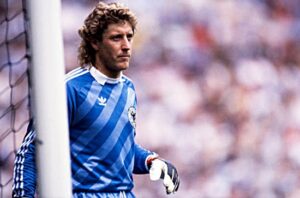

Harald Schumacher of West Germany during the European Championship match between West Germany and Portugal at Meinau, Strasbourg, Paris on 14th June 1984 
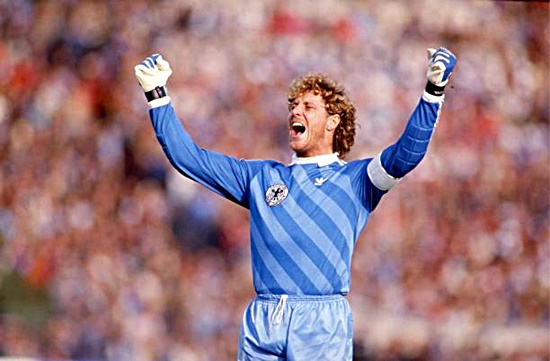

 02.03.1985 - Portugal / Republique Federale Allemagne - Eliminatoires Coupe du Monde 1986, 
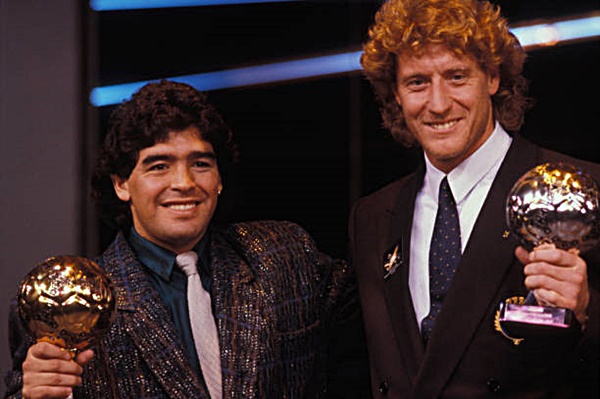

Diego Maradona et Harald Schumacher ont reçu un soulier d'or à Paris le 13 novembre 1986, France. 
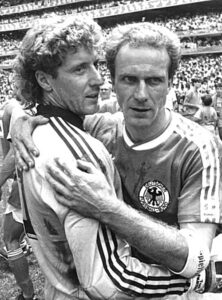

Harald "Toni" Schumacher (left) and German team captain and goal getter Karl-Heinz Rummenigge hug each other after the final whistle of the World Cup final on 29 June 1986 at the Aztec Stadium in Mexico City,
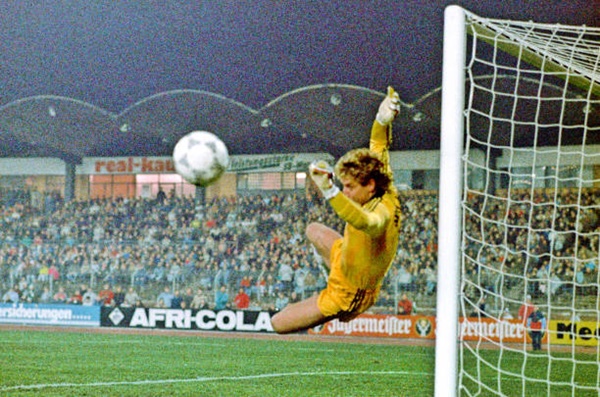


Schalke TW Harald Schumacher. Saison 1987-1988 Hannover 96 (Rot) gegen Schalke 04 3:1. 
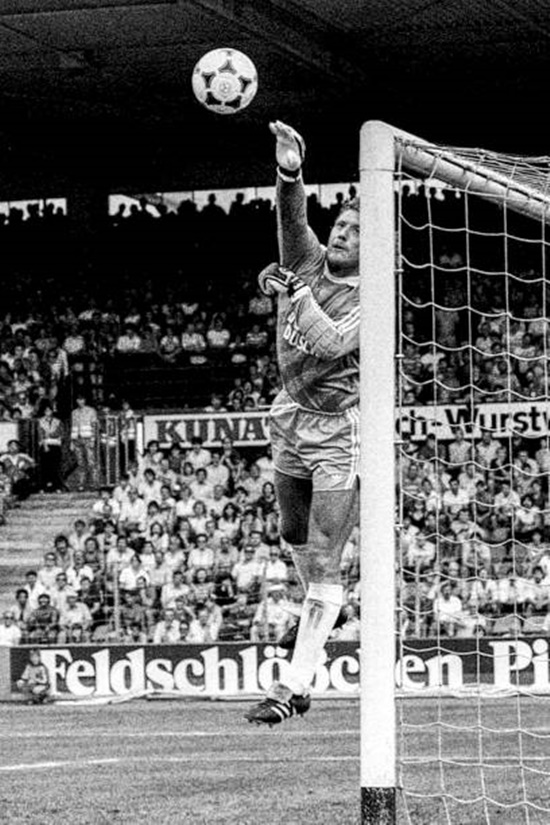


Saison 1981/82 Eintracht Braunschweig gegen den 1. FC Köln 4:4. 
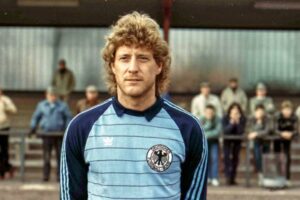


Deutschland gegen Spanien 2:2 im Niedersachsenstadion in Hannover.
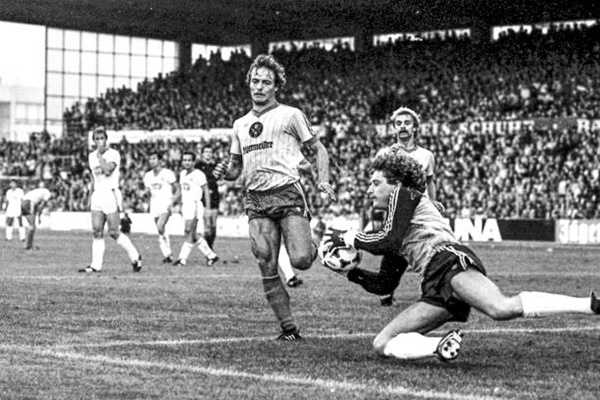


Saison 1981/82 Eintracht Braunscheweig gegen den 1. FC Koeln 4:4 .
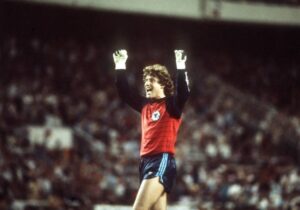


08.07.1982 im Sanchez-Pizjuan-Stadion von Sevilla im Weltmeisterschafts-Halbfinalspiel gegen Frankreich in der Verlängerung den 3:3
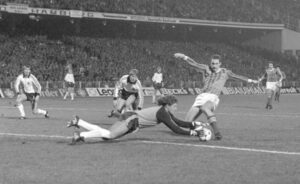


16.11.1983 vor 62.000 Zuschauern im Hamburger Volksparkstadion das EM-Qualifikationsspiel gegen Nordirland mit 0:1.
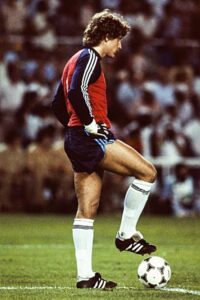


Harald Schumacher of West Germany during the 1982 FIFA World Cup Semi Final match between West Germany and France, at Ramon Sanchez Pizjuan, Sevilla, Spain on 8 July 1982
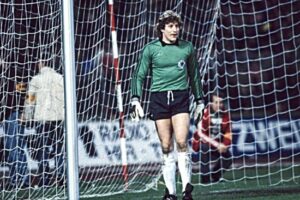
 
Harald Schumacher of West Germany during the International Friendly match between West Germany and France at AWD Arena, Hannover, Germany on November 19th, 1980 


© Translated from German to English by:
Eni F. Kapurani (original fan of Germany and especially of Tony Schumacher)

June 27, 2025
_____________________
Sports Vision +Plus / Champions Hour in activity since 2013
Some of photos are collected from google search. If you have any issue on photos, please let us know first before you are making any reports!

Sunday, June 15, 2025

The unique case of Pele's debut!


To stimulate the curiosity of our readers we have formulated the question as follows: Has it ever happened in football that a player made his debut for the national team before his club team?

This is a practically impossible feat. In a certain sense, only the greatest, Pelé, managed it. In a certain sense, because on July 7, 1957, sixteen-year-old Edson Arantes do Nascimento belonged to the Santos reserves (he was the shadow man of the future AC Milan player Del Vecchio) and therefore had not yet made his debut in the championship.

Coach Lula had given him the starting spot on four occasions alone in the San Paolo Rio Tournament, which saw the top five teams from the Paulista and Carioca championships compete. Pelé began playing for Santos at age 15. Just one year later, It was therefore a surprise when, in view of the Copa "Roça" between Brazil and Argentina, the coach Silvio Pirillo also called up the "baby" Pelé.

Some thought it was a mistake. Instead, on July 7, 1957, in the second half, down 0-1, he sent him on the field in place of "Mazola", aka José Altafini, a nineteen-year-old making his second appearance.
Brazil lost the match 2-1 but Pelé, needless to say, scored at 32`.
And it happened again three days later, when in the return match Brazil won 2-0, with a goal from the future "Black Pearl" and a second from Altafini himself, winning the Cup.

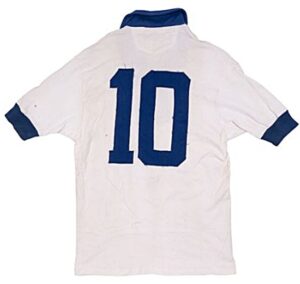
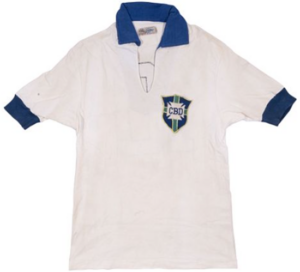
Photos above shows incredibly early Pelé Brazil match worn jersey dating to his 1957 debut season with Seleção.

It could be his earliest known Brazil National Team jersey! The white cotton shirt with an open blue collar and ribbed blue sleeve-ends has an early CBD (Confederação Brasileira de Desportos or Brazil Sports Confederation) crest embroidered on the left chest, with his famous number “10” on the back in blue.
The provenance of this shirt is very significant.

It was gifted by Pelé to fellow Brazilian superstar, Garrincha, who teamed with Pelé for the 1958 and 1962 World Cup titles. Many forget that Pelé got injured in the second game of the ’62 WC and missed the rest of the tournament in Chile. It was Garrincha who led Seleção to their ’62 FIFA crown. With the two legends on the pitch together, Brazil never lost a match.

© Copyright by
Pjerin Bj
New York: June 14, 2025
_______________________________
Sports Vision + Plus / Champions Hour in activity since 2013

Saturday, May 31, 2025

The glorious foot of Friedenreich!

 Artur Friedenreich!

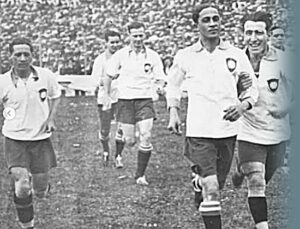
In 1919 Brazil defeated Uruguay 1–0 and crowned itself champion of South America. People flooded the streets of Rio de Janeiro. Leading the celebration, raised aloft like a standard, was a muddy soccer boot with a little sign that proclaimed: “The glorious foot of Friedenreich.”

The next day that shoe, which had scored the winning goal, ended up in the display window of a downtown jewelry shop.

Artur Friedenreich, son of a German immigrant and a black washerwoman, played in the first division for twenty-six years and never earned a cent.

No one scored more goals than he in the history of football, not even that other great Brazilian artilleryman, Pelé, who remains professional
soccer’s leading scorer.

Friedenreich converted 1,329, Pelé 1,279.

This green-eyed mulatto founded the Brazilian style of play. He, or the devil who got into him through the soles of his feet, broke all the rules in the English manuals: to the solemn stadium of the whites Friedenreich brought the irreverence of brown boys who entertained themselves fighting
over a rag ball in the slums.

Thus, was born a style open to fantasy, one that prefers pleasure to results.
From Friedenreich onward, there have been no right angles in Brazilian soccer, just as there are none in the mountains of Rio de Janeiro or the buildings of Oscar Niemeyer.

Copyright by Eduardo Galeano
From his book: Soccer in the Sun and Shadow (Nations Books, New York) 2013

___________________
Sports Vision + Plus / Champions Hour in activity since 2013

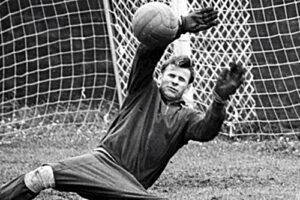
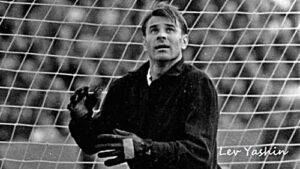
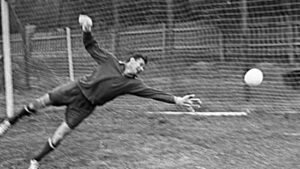
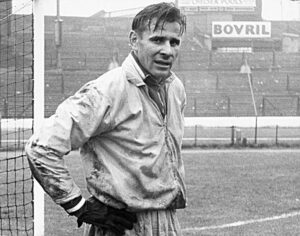
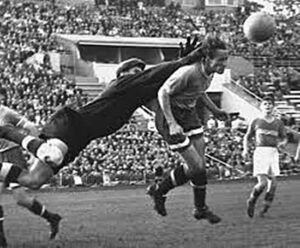
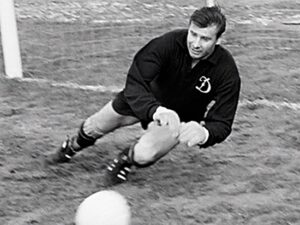
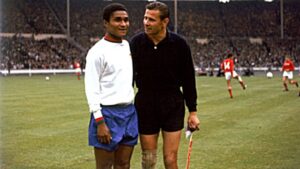
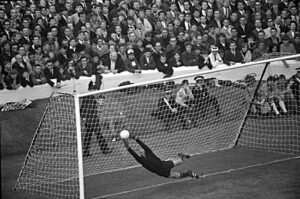
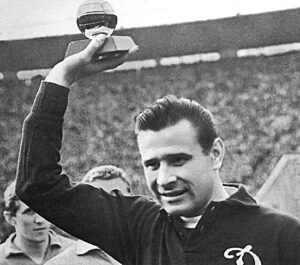
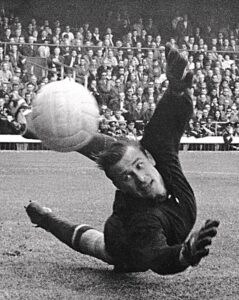
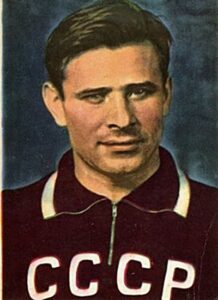
Lev Yashin (1929-1990) | “Black Spider”, the Greatest Goalkeeper in the History of the Game!

 The story of the black spider is one of unwavering commitment to duty rather than to self, against a fluctuating backdrop of adversity and stardom.

On the morning of June 22, 1941, Vyacheslav Molotov made a radio broadcast to the Soviet people. His speech began with the chilling line: “Without a declaration of war, German forces attacked our country.”

Germany had launched Operation Barbarossa, the largest military invasion in history. Molotov called upon all Soviet citizens to unite in defence of their homeland, framing the conflict as a war for survival and the preservation of national independence.

Amidst the turmoil, a 12-year-old boy in Moscow was doing his bit for the war effort. Lev Yashin walked to a munitions factory where he worked producing the bombs and bullets that would rain down across Europe. Little did he know that this early, humble contribution would mirror his lifelong commitment to act as the last line of defence for his country.

On his way to the factory, Yashin would traverse a Moscow dominated by a harsh aesthetic. Rows of Khrushchyovka - nondescript, grey communal apartments - flanked the streets. These stark structures crammed families into small, shared spaces. Many buildings were old, worn, and soot-streaked, standing alongside newer industrial structures, signs of the city's rapid modernisation.

The skyline was punctuated by smoking chimneys from nearby factories, a reminder of the relentless push for production under Stalinism.
Workers, men and women, in plain, practical clothing, their hands calloused from hours of labour, bustled toward their shifts. They carried metal lunch tins, their faces betraying the weariness of long days spent assembling machinery or hammering steel.

Despite their fatigue, there was an air of camaraderie.
These early experiences likely shaped young Yashin’s worldview. As he walked through this bustling, struggling city, he would have seen people persevering, working together, and finding joy in small moments despite the challenges. This sense of collective effort and loyalty to one's comrades would later translate into his philosophy on the football field, where teamwork and selflessness defined a legendary career.

Today, where athletes like Messi and Ronaldo set seemingly unbreakable records, it raises the question: is perfection a prerequisite for greatness? Or is true greatness found in those who face adversity, fall, and then find the strength to rise again?

Perfection is especially elusive for goalkeepers. Mistakes are amplified and the pressure of an entire team’s fate can feel concentrated in the hands of one man. The goalkeeper stands alone, a solitary figure in a role defined by high stakes and inevitable blunders. Yashin understood this burden all too well.

As the cornerstone of the Soviet team, the country's greatest player, and a symbol of Soviet strength on the world stage, he embodied the intense weight of expectation. Yet, it wasn't his flawless performances that defined him but his ability to absorb the pressure, confront failure, and come back stronger each time. Yashin's greatness lay in his refusal to bow to the inevitable imperfections of the game and life itself.

Life in mid-20th century Soviet Russia could break or shape men into resilient figures, testing their limits and resolve. In 1962, Lev Yashin found himself thrust into the harsh spotlight after the Soviet Union's disappointing exit from the World Cup in Chile. Knocked out in the quarters by the host nation, the Soviet team suffered a 2-1 defeat. Yashin was blamed for two soft goals that contributed to the loss.

When the team returned to Moscow, the fury of the public was immediate and unforgiving. At the airport, fans held signs that read “Yashin retire” and “Time to get your pension.” The criticism didn’t stop there - Yashin’s home windows were smashed, insulting messages were scrawled on his car, and threatening letters filled his mailbox. He would later describe this time as the "most bitter" of his football life.

This was Yashin's rock bottom, yet it wasn’t the only time he’d been forced to confront adversity.

As a young man working in the factory, he played for the company’s ice hockey team, where his lightning-fast reflexes and agility soon caught the attention of scouts. His natural talent for goalkeeping translated easily into football, and he found himself playing regularly in both sports.

However, the turbulence of the times weighed heavily on the young Yashin. He was at a crossroads between adolescence and adulthood, caught in the storm of domestic and global unrest. The pressure became unbearable, and he quit everything - sport, work, life itself.

Reflecting on this period in his autobiography, Yashin recalled, “Was it depression? I don’t know. The fatigue accumulated over the years began to make itself felt, and something in me suddenly broke. At that time, I felt nothing except emptiness.” Disillusioned and broken, Yashin fell into a deep personal crisis, his passion for life and sport drained.

It took enlisting in the military to bring him back from the brink. Combining his duties with football reignited his spirit. Soon, scouts from Dynamo Moscow took notice, and in 1949, he was invited to join the club. It was a huge step for Yashin, but not everything went as planned. He played poorly in a friendly and only featured in two games that season before being demoted to the reserves.

An early test of his resilience, his path to the first team blocked a star in his own right, Alexei ‘Tiger’ Khomich. However, determination eventually worked in his favour - when Khomich retired in 1953, Yashin's opportunity to take the reins finally arrived.

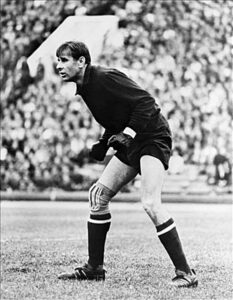
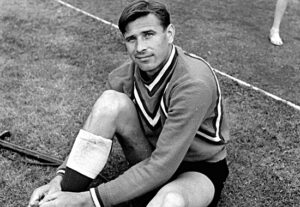
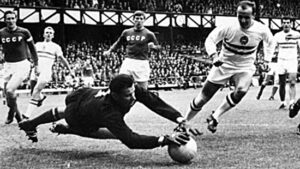
Quickly, Yashin’s role at Dynamo began to take shape. His all-black kit, signature flat cap, and preternatural reflexes earned him the nickname "Black Spider." His limbs defied physics, capable of being in eight places at once. But Yashin was more than just a goalkeeper—he was a psychological weapon. His towering presence, coupled with his imposing attire, created a sense of intimidation, making opponents feel as though the goal had somehow shrunk in his shadow.

Goalkeeping in the 1950s was a largely passive affair. Goalkeepers were expected to stay on the line, react to shots, and nothing more.
Yashin shattered these conventions.

He commanded his box, charging out to punch crosses or intercept through-balls. This new proactive style effectively gave his team a sweeper behind the defence. As Franz Beckenbauer observed, Yashin “was the model for what the modern goalkeeper should be.”

Vocality was another hallmark. Constantly barking instructions to defenders, he acted as an on-field manager, another attribute that has become a staple of elite goalkeeping. Legendary goalkeeper Dino Zoff noted that Yashin “didn't just save shots; he organised and dominated his team’s defence.”

Yashin’s rise coincided with Dynamo Moscow’s dominance in Soviet football. Throughout the 1950s, he helped secure five Soviet Top League titles and three Soviet Cups. On the international stage, Yashin anchored the Soviet Union’s triumph in the 1956 Olympic Games and their victory in the inaugural European Championship in 1960.

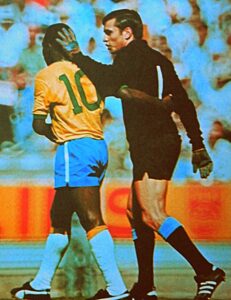
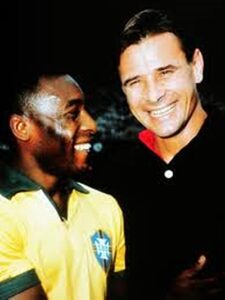
His performance in the 1958 World Cup, where the Soviet Union reached the quarter-finals, solidified his reputation globally. Despite their exit, his standout saves (including a penalty stop against Pelé's Brazil) earned him widespread acclaim. Pelé himself described Yashin as “the best goalkeeper in the history of football.”

In 1960, his status was solidified with the Order of Lenin, and by 1962, Yashin was at the peak of his career. He had not only redefined goalkeeping but had become a worldwide icon. Yet, as always, the spectre of adversity lingered.
Despite Yashin’s towering legacy, doubts began to creep into the minds of Soviet football authorities. In the summer of 1961, Yashin was dropped for three matches. Lokomotiv Moscow’s Vladimir Maslachenko stepped in. By August, Yashin reclaimed his starting role, but whispers of decline persisted.

Heading into the 1962 World Cup in Chile, Yashin was 32, relatively advanced for a goalkeeper in that era. His reputation remained formidable, but age-related concerns hung heavy. These doubts seemed vindicated during the group stage match against Colombia, where Yashin made two uncharacteristic mistakes, including conceding directly from a corner. The match ended in a 4-4 draw, a rare blot on Yashin’s otherwise immaculate record.

The quarter-final against Chile was no kinder. Yashin’s aura of invincibility faltered again as La Roja struck twice. Yet, the most surreal moment came after Eladio Rojas scored the winner. Rojas, overcome with disbelief at beating Yashin, sprinted not to his teammates but Yashin himself, embracing him in what he later described as sheer awe. “Scoring past Yashin was like winning a trophy,” Rojas would reflect.

Unbeknownst to many at the time, Yashin had suffered a concussion in a collision earlier in the match. Still, for the Soviet press and public, excuses mattered little. Yashin became a scapegoat. Whistles and jeers greeted him upon his return to Moscow. According to his wife, Valentina, the relentless criticism cut deep. “He wanted to quit,” she recalled.

At what seemed like his lowest point, fate offered a chance at redemption. On October 23, 1963, Wembley Stadium hosted a match between England and a World XI to celebrate the centenary of the FA. Selected by Chilean manager Fernando Riera, many questioned the decision to include a perceived has-been.
Yashin, however, delivered a masterclass.

Save after save - including a jaw -dropping denial of a Jimmy Greaves strike - left the Wembley crowd gasping. The English press, notoriously harsh on foreign players, lavished praise on him, declaring that Yashin had “single-handedly defied England’s best.” It became Yashin’s rebirth. He later reflected that the night at Wembley prolonged his career and reignited his love for the game.

With his confidence and reputation restored, Yashin returned to Moscow determined to silence any lingering doubts. But what came next was beyond even his wildest dreams: the Ballon d’Or. To this day, Yashin remains the only goalkeeper to have ever won the award, a testament to his unparalleled impact on the game.

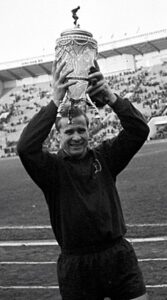
The award was officially presented to Yashin on May 27, 1964, before a sea of over 100,000 fans at Luzhniki Stadium, moments before the USSR’s European Championship quarter-final clash with Sweden. Standing tall in his iconic all-black kit, he held the Ballon d’Or aloft, a symbol of his unprecedented achievement.

But for Yashin, the moment was less about celebration than duty. His wife, Valentina, later revealed their Ballon d'Or celebrations were surprisingly understated. "Maybe we had a special dinner at home, but nothing too fancy," she admitted. Yashin’s focus was never on the accolades; his drive was fueled by something far deeper.

His motivation came from a profound sense of responsibility—not to himself, but to his team, his city, and his country. He didn’t play for glory; he played to protect, to serve, and to defend.

Yashin put it best himself: “What kind of goalkeeper is not tormented by a goal he has conceded? He must be tormented! And if he is calm, that means the end.”

It was this relentless pursuit of perfection - this self-imposed torment - that set Yashin apart from all others. Every goal conceded was a personal defeat; every save, a silent act of defiance. Resilience, rather than trophies, was the true measure of his greatness.
Lev Yashin’s story is not about triumphing over adversity for personal gain. It is about embracing the weight of responsibility and finding greatness in service to others. That unwavering commitment to duty, rather than self, is what makes him the greatest goalkeeper to ever play the game.

New York: April 26, 2025

https://www.sportsvisionplus.com/lev-yashin-1929-1990-black-spider-the-greatest-goalkeeper-in-the-history-of-the-game/

________________
Sports vision + Plus / Champions Hour in activity since 2025

1985 | Rare in Sports!

 Rare in Sports

1 - Thousands of points!
Of course, a basketball player with a long sports career scores thousands of points. But what is the record of scoring?
So exactly how many points did the record holder manage to score?

This record in the 1980s (more precisely until 1985) reached 33,262 points, which specialists call it fantastic.

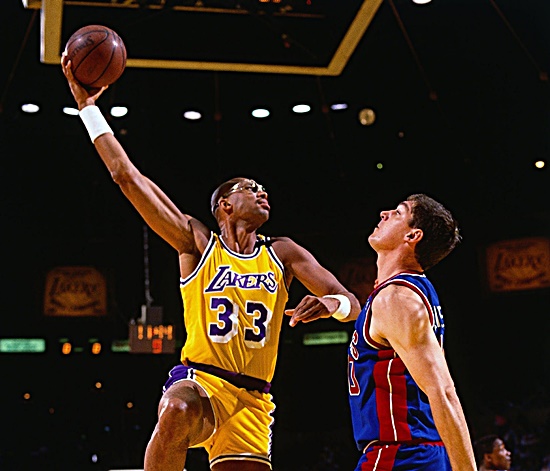
This rare basketball record belongs to the famous player Lu Alcindor, also known as Kareem Abdul Jabar, who achieved this result in 1985 at the age of 38. He also achieved the other record of games played in NBA championships of 1249 such.

Jabar is 2.20 cm tall and weighed 115 kg.

He was among the rare basketball players of that time who scored most of his points in the “hook-shots”, thus becoming almost unmarked.

Jabar's career spans more than 20 years as a basketball player, setting another longevity record in this sport. He plays with glasses, not because he doesn't see well, but as he himself has said, it's the only way he can protect his eyes from the fingers of other players and opponents.


2 - 1985 edition of Ultramarathon,

Westfield-Sidney-Melbourne.

The classic marathon race, the one with a distance of 42.195 km, has been known since ancient times, but...
An original marathon race was held in Australia from 1981 - 1992, called the super marathon or Ultramarathon.
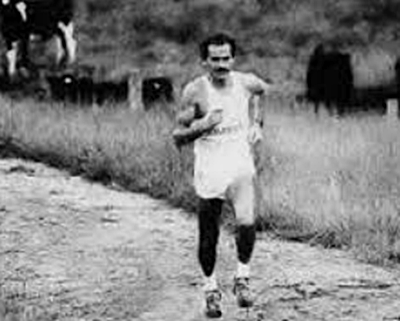
The route covered a distance of 960 km, from Westfield-Sidney-Melbourne. The winner of the race in 1985, was Yannis Kouros, who was only allowed to waste time for lunch, covered the distance in 5 days and 5 hours.


The race also gave a second result, out of the 28 participants, more than half left it unfinished.
So, it goes!


3 - 243 km/h | Land-Speed Record Bicycle

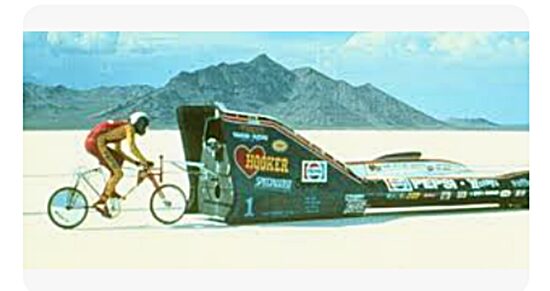
At the dry bottom of the Bonneville Salt Lake, in the American city of Wendover, John Howard, in fact a 3-time Olympic cycling champion in the 1968, 1972 and 1976 Olympics, achieved an incredible world record.

In 1985, the 37-year-old reached a fantastic speed of 243 km/h on his bicycle, which was a new world record for means of transport propelled solely by human muscle power.

The record until then was held by Allen Abbott with 222 km/h, achieved in 1973. Howard achieved the world record on his seventh attempt. He was pulled up to a speed of 96 km/h by a racing car, and then he “heavy-eyed” the pedals in an excellent way.

Before that, on the fifth attempt, he almost suffered. Having reached a speed of 241 km/h, the rear tire immediately let out air. The bike lurched left and right, and Howard almost fell out of the “saddle”.

So, a broken valve was replaced, and he got back on the “horse”. And so, the seventh attempt also brought the result.

Howard told reporters that he had enjoyed fast cycling since childhood and that he had a desire to become a world record holder. He read at the time that the world record was held by a Frenchman at 168 km/h.

4 - As early as 8 years old
At what age can a footballer register with a team?
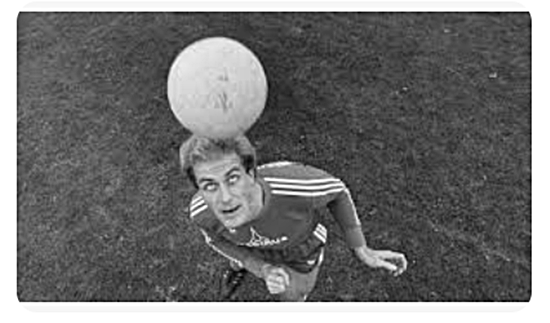
Without a doubt, the case of West German footballer Carl H. Rrummenigge is one of the most special, among the rarest.

As early as the age of 8, he was registered as a footballer for the «Borussia» team in Lipstadt, of course with the children's team.
The first match of this 8-year-old was against the children's team <<Teutonia» which ended 13:0 and the 8-year-old Rrummenigge scored 6 goals!

5 - 100 goals scored

In the 1984-1985 season championships in various European countries, there was one team that reached the rare figure of 100 goals scored.

This was the Belgian champion «Anderlecht», which had a goal difference of 100:25.

Next to its figures were the Dutch champion «Ajax» with a goal difference of 93:46, then the GDR «Dynamo» Berlin with the figures 90:28, the English champion «Everton» 88:43, and the West German champion «Werder» Bremen with 87:51.


© Copyright
Collected by Pjerin Bj.
New York: April 11, 2025

https://www.sportsvisionplus.com/1985-rare-sports-moments/
________________
Sports Vision + Plus / Champions Hour in activity since 2013

Thursday, February 13, 2025

The Legend Martina Navratilova | The Dominant Force in Women’s Tennis!


https://www.sportsvisionplus.com/the-legend-martina-navratilova-the-dominant-force-in-womens-tennis/

World sports champions, stories and cases without similarities to each other.

Welcome to “Sports Vision +Plus”!

Prologue!

Left handed, Martina Navratilova, without exaggeration is the Queen of Tennis;

Just like a fine wine, Navratilova only got better with age, dominating the sport well into her 40s. Her powerful serve was like a cannonball, leaving opponents reeling. Her volleys were as precise as a surgeon’s scalpel, slicing through opponents’ defenses with ease.

1.

Martina Navratilova is widely regarded as one of the greatest tennis players of all time.

Born on October 18, 1956, in Prague, Czechoslovakia, Martina defected to the United States in 1975 and became a naturalized citizen in 1981.

Her impressive career spanned over three decades, during which she dominated the sport, breaking numerous records and winning countless accolades.

Born as Martina Subertova, she experienced her parents’ divorce when she was three years old. Her mother was a gymnast, a tennis player and also a ski instructor and may well have passed on the champion’s DNA to her daughter.

Her maternal grandmother was also a tennis player before W.W.II, ranking as high as №2 among Czech women during her amateur career.

She had her first contact with a tennis ball at the tender age of two, while at the age of seven she began to play regularly this sport that would give her famous name and titles, making her an undisputed champion in the sport of tennis.

From 1972, when she won the national champion title in Czechoslovakia for the first time at the age of 15, until 2006 when she retired from the sport, they constitute a span of time of an excellent career.

She participated in 1973 on the United States Lawn Tennis Association professional tour but did not turn professional until 1975. But a year earlier, in 1974, the 17-year-old Navratilova won her first professional title at the Orlando tournament.

In 1975 Navratilova was the runner-up at two major singles tournaments: the Australian Open (won by Goolagong) and the French Open (won by Chris Evert in three sets).

After losing to Evert in the semifinals of the US Open in September of the same year, the 18-year-old Navratilova went to the offices of the Immigration and Naturalization Service in New York City and informed them that she wished to defect from communist Czechoslovakia.
Within a month, she received a green card and in 1981 became a US citizen.

Also in 1975, Navratilova teamed with world number one Evert to win the French Open women’s doubles title, Navratilova’s first major title. The two teamed up again in 1976 to win the women’s doubles title at Wimbledon, defeating fellow pair Billie Jean King and Bette Stove.

Navratilova and Evert, Chris and Martina, were teammates, but they would undoubtedly become rivals. Their duels on the tennis court are countless. Thus, in 1978, Martina would win her first major title at the prestigious Wimbledon tournament, defeating Chris Evert in three beautiful sets in an exciting final, becoming number 1 in the world in the WTA rankings.

Also in 1979, she would defend her Wimbledon title, defeating Evert again in the final. But just before Wimbledon that year, Evert and Navratilova played what was possibly the highest scoring women’s professional match ever in the Eastbourne final, in which Evert edged Navratilova 7–5, 5–7, 13–11 after facing match points.

Later, her matches will be recorded to be kept long in the history of this sport, challenges that have created the history of the Tennis game specially during the time period of the mid-1970s and the decade of the 1980s.

In 1980, Navratilova defeated six-time former Wimbledon champion Billie Jean King in an epic two-day match in the Wimbledon quarterfinals,
7–6 (8–6), 1–6, 10–8.

In 1981, Navratilova won her third major title by defeating Evert in the final of the Australian Open. Navratilova also defeated Evert to reach the final of the US Open, where she lost a third-set tiebreak to Tracy Austin. Navratilova won Wimbledon and the French Open in 1982.

In April 1981, Evert defeated Navratilova in the finals of the Women’s Tennis Association Championships, held on clay at Amelia Island, 6–0, 6–0. It was Navratilova’s heaviest and only loss in straight sets… however, in 1984, at the same tournament, Martina got her revenge with a crushing 6–2, 6–0 loss to now-rival Chris Evert!

In the early 1980s she would dominate the tournament scene, especially the Grand Slams. During 1982, 1983 and 1984, Navratilova lost only six matches in total.

This included a 13-match winning streak against her closest rival and world number 2, Chris Evert. Navratilova’s reign from 1982 to 1986 is the most dominant spell in the professional tennis era.

The rivalry with Evert continued into the second half of the 1980s. In 1985, Navratilova performed in what many consider to be perhaps the greatest women’s match of all time, the French Open final against Chris Evert.

Navratilova came back from 3–6, 2–4 down to 5–5 all in the third set, before Evert hit the match-winning point to defeat Navratilova 6–3, 6–7 (4–7), 7–5. Television sports commentator Bud Collins said that tennis needed to create a higher league for Navratilova to compete in.

The balance of the two iconic players was as follows: In their outdoor matches against Evert, Navratilova led 10–5 on grass and 9–7 on hard courts, while Evert was better on clay 11–3. Indoors, Navratilova held a decisive 21–14 lead. At the end of what is widely considered the greatest rivalry in women’s tennis, Navratilova led Evert 43–37 in total matches, 14–8 in Grand Slams, and 10–4 in Grand Slam finals!

In the mid-1980s, another rivalry arose, that between Navratilova and Steffi Graf.

In 1986 at the US Open, in the most anticipated match of the tournament, Navratilova prevailed over 17-year-old German Steffi Graf in the semifinals 6–1, 6–7(7–3), 7–6(10–8), saving three match points in an epic spread over two days.

Graf dominated the first half of the 1987 season including defeating Navratilova in straight sets in the semi-finals of the Miami Open and in the final of the French Open, 6–4, 4–6, 8–6. However, Navratilova defeated Graf in straight sets in the finals of both Wimbledon and the US Open.

Navratilova reached all four Grand Slam finals in 1987, winning two of them. Graf’s two losses to Navratilova were her only losses of the year and with 11 tournament wins over the year versus 4 for Navratilova she was able to obtain year-end world №1 ranking ahead of Navratilova at №2.

Graf eventually broke Navratilova’s records of 156 consecutive weeks and 331 total weeks as the world №1 singles player but fell 60 short of Navratilova’s record of 167 singles titles.

Including doubles, Navratilova won almost three times as many titles as Graf with a record doubles/mixed/singles combined total of 344 titles to Graf’s 118.

In 1988, Graf won all four major singles titles, beating the 31-year-old Navratilova 5–7, 6–2, 6–1 in the Wimbledon final, their only match of the year, recovering from a set and a break down.

Navratilova did not reach the finals of any of the other Grand Slam events but did win nine tournaments enabling her to claim the №2 ranking behind Graf.

In 1989, Graf and Navratilova met in the finals of both Wimbledon and the US Open, with Graf winning both encounters 6–1 in the third set.

Graf also defeated Navratilova in the finals of the WTA Tour Championships their third and final match of the year.

Navratilova, who skipped the French Open that year, did win eight titles and was able to capture the №2 ranking behind Graf for the third straight year.

Despite the 13 year age difference between the two players, and Graf’s comparative lack of investment in doubles and mixed doubles, Navratilova won 9 of the 18 career singles matches with Graf and 5 of the 9 major singles matches with her.

At age 34, Navratilova defeated Graf the last time they played in a major in the semifinals of the 1991 US Open 7–6(7–2), 6–7(6–8), 6–4, to end their Grand Slam rivalry 5–4 up, although it is noteworthy that all 4 of Graf’s Grand Slam victories over Navratilova came in the finals of a Slam.

Navratilova’s final Grand Slam singles triumph was in 1990. In the final at Wimbledon, the 33-year-old Navratilova swept Zina Garrison 6–4, 6–1 to claim an all-time record ninth Wimbledon singles crown.

Though Wimbledon 1990 was her last major singles title,

In September 1992, the 35-year-old Navratilova played 40-year-old Jimmy Connors in the third Battle of the Sexes tennis match at Caesars Palace in Paradise, Nevada. Connors was allowed only one serve per point, and Navratilova was allowed to hit into half the doubles court. Connors won 7–5, 6–2.

Career Highlights:

- Record-breaking Grand Slam titles:

Martina won an unprecedented 167 singles titles, including 18 Grand Slam singles titles (a record for the Open Era).

- Unbeatable streaks:

She held the number one spot in the world rankings for a record 331 weeks and won 74 consecutive matches in 1981–1982.

- Dominant doubles player:

Martina won 331 doubles titles, including 33 Grand Slam women’s doubles titles.

- Olympic medals:

She won three Olympic medals, including a gold medal in women’s singles at the 2004 Athens Olympics.

- Awards and recognition:

Martina was inducted into the International Tennis Hall of Fame in 2000 and received the International Tennis Federation’s (ITF) highest honor, the Philippe Chatrier Award, in 2003.

LGBTQ+ icon:

Martina has been an outspoken advocate for LGBTQ+ rights and has used her platform to promote acceptance and inclusivity.

Martina Navratilova’s remarkable career, both on and off the court, has left an indelible mark on the world of tennis and beyond.

Martina’s athleticism and agility allowed her to cover the court with ease, making impossible shots seem routine. Her exceptional hand-eye coordination and reaction time enabled her to return even the fastest serves with precision and power.

Her strategic brilliance and mental toughness made her a formidable opponent, able to outmaneuver and outlast even the toughest foes.

Her powerful groundstrokes and precise volleys made her a force to be reckoned with, capable of overwhelming opponents with sheer firepower.

By Pjerin Bj.

New York 12, 2025

https://www.sportsvisionplus.com/the-legend-martina-navratilova-the-dominant-force-in-womens-tennis/

_________________________
Sports Vision + Plus / Champions Hour in activity since 2013

Saturday, December 19, 2020

WORLD RECORDS IN ATHLETICS THAT HAVE RESISTED TIME


#SportVisionTheChampionsHour   #TrackandField    #Athletics   #WorldRecords

WORLD RECORDS IN ATHLETICS THAT HAVE RESISTED TIME

I belong to a generation that grew up with the sports and champions of the 80s and early 90s! For over 15 years I have followed Football, Athletics, Swimming, Gymnastics, Skiing, Hockey, Figure Skating, Boxing, Equestrian, Tennis, almost every sport involved in program of the Summer or Winter Olympics up to Automobilism-Formula 1. It was a time of real champions like: Maradona, Gullit or Van Basten, Carl Lewis, Florence Griffith Joyner, Michael Gross, Mat Biondi, Vitaly Scherbo, Alberto Tomba or Ingemar Stenmark, Katarina Witt, Mike Tyson, Martina Navratilova or Boris Becker, Alain Prost, or Ayrton Senna, Piquet, Mansell etc.

Oh, it`s been a while since…..In fact, I have not followed the sport events for quite some time, I even forgot to count when it was the last time of my interest in sports, maybe since 2010. Probably because from that year my notes and records start to become rarer until they no longer appear at all in my collection!

However one night ago I became curious and set out to learn about world records in Athletics, so now days in 2020, is there still valid such a record set during the 80s – 90s by the athletes of that generation ?!   I thought: It has been a long time, of course athletics has changed as well as all sports in general, so it is difficult to have left still as recorder any names like Carl Lewis, Ben Johnson, Steve Cream, Sergey Bubka, Stefka Kostandinova, East German women with Marita Koch, Marlize Goer ... However, I could not resist this temptation and I started to do some investigation. 

The record holder Jurgen Schltz (74.08m) since June 6-1986 
 

Here I start in the men's races, in the discus and hammer  the records of the East German Jürgen Schultz (74.08m) set in Neubrandenburg, Germany, on 6-06-1986 and athlete Yuri Sedykh  of the Soviet Union (86.74m) on 30-08-86, still remains valid today.

Then there is still an unbroken record set in the high jump by the Cuban Javier Sotomayor since 1993 (2.45m), located in Salamanca. Here is another one of the Italian in 30Km walking, set by Maurizio Damilano (2h; 1.44) in Cuneo, Italy on October 3, 1992. Even the US American relay of 4x400m (2.24.59) still stands today since August 22, 1993 located in Gotlieb Damlier  at Stuttgart Stadium. So in total there are 5 records in men's competitions still unbroken.

Florence Griffit Joyner (USA)

 
Jarmila Kratochvilova (CZE) Her 800-metre world record is the longest standing track record in men or women's athletics

In the women's races, the 100m (10.49) and 200m (21.34) records set on July 16, 1988 in Indianapolis and September 29, 1988 in Seoul at the Olympic Games, by Florence Griffith Joyner of the United States, continue to stands as unbroken world records, although unfortunately the athlete is no longer alive . Joyner will die 10 years later on September 21, 1998.


The East German Champion Marita Koch, the WR holder in 400m since 1985   

Galina Chistyakova USSR
 

Also still standing today is the record set by Jarmila Kratochvilova in 800m (1.53.28) since July 26, 1983 and East German Marita Koch at 400m (47.60) since October 26, 1985 at the Bruce Stadium in Cambera, Australia. Likewise, the name of the Bulgarian Stefka Kostandinova as the record holder in high jump (2.09m) set on August 30, 1987 has not been scratched off  since the World Championship in Rome. Even in the long jump (7.52m) Galina Chistyakova (Галина Валентиновна Чистякова), of USSR continues to maintain her record set since June 11, 1988.

In the shot put competitions (22.63m) Natalya Lisovskaya of USSR, since June 7, 1987, and in the disk race (76.80) by Gabriela Reinsh of the GDR, set on July 9, 1988, still resist time. Further during this search I still find in valid the record of the American Jackie Joyner Kersee  in the Heptathlon (7291 points) set on September 24, 1988 at the Seoul Olympic Games. 

Stefka Kostandinova of Bulgary the world record holder in high jump since 1987.

Natalya Lisovskaya USSR

 
4x 400m relay of the Soviet Union girls (3.15.17) wich was set on October 1, 1988, also in the Seoul Games, still holds the time.

The balance sheet closes for the women's races with 9 such world records that still resist time, reaching out in total 14 records, men and women where still up to today’s date December 17, 2020 remain unbroken!!!

 _______________

Sport Vision | Champions Hour  / P.B /  December, 17  2020 ( 11; 27 Pm)

Follow us: 

Facebook : https://www.facebook.com/VizionSportiv

Dailymotion: https://www.dailymotion.com/kinematografiashqiptareartisporti 

Blog:  https://pierosportvision.blogspot.com/